
Gum disease is one of the most common oral health conditions affecting adults, yet many people don’t realize they have it until symptoms become severe. If left untreated, gum disease can lead to persistent bad breath, gum recession, tooth loss, and even impact your overall health. Fortunately, early intervention with professional gum disease treatment can help stop the progression of the disease and restore healthy gums.
One of the most effective non-surgical treatments for periodontal disease is scaling and root planing, a deep-cleaning procedure designed to remove harmful bacteria, plaque, and tartar from below the gumline. While routine dental cleanings and teeth cleaning appointments are essential for maintaining oral health, patients with signs of gum disease often require a more advanced treatment approach.
If you’re searching for gum disease treatment in Scottsdale or looking for reliable gum disease treatment near me, understanding how scaling and root planing work can help you make informed decisions about your oral health. In this guide, we’ll explore why this procedure is considered the gold standard for non-surgical gum disease treatment and how it can help patients achieve healthier smiles in Scottsdale.
Understanding Gum Disease
Gum disease is a progressive condition caused by bacterial infection and inflammation of the tissues surrounding the teeth. Early diagnosis and treatment can significantly improve outcomes and reduce the risk of permanent damage to the gums and supporting bone.
What Is Gum Disease?
Periodontal disease, commonly known as gum disease, begins as gingivitis and can advance into periodontitis if left untreated. Gingivitis causes redness, swelling, and bleeding gums, while periodontitis affects deeper tissues and bone structures that support the teeth.
Over time, plaque and bacteria accumulate along the gumline, triggering inflammation. If not removed through proper teeth cleaning and professional care, plaque hardens into tartar, creating an environment where harmful bacteria thrive.
Common Signs and Symptoms
Common symptoms of gum disease include:
- Red, swollen, or tender gums
- Bleeding during brushing or flossing
- Persistent bad breath
- Receding gums
- Tooth sensitivity
- Loose or shifting teeth
- Deep pockets between teeth and gums
Recognizing these warning signs early can help patients seek appropriate gum health care before serious complications develop.
Interesting Read: Gum Disease: Causes, Symptoms, Stages, and Treatment Options
What Causes Gum Disease?
Multiple factors contribute to periodontal disease, but bacterial plaque remains the primary cause. Understanding these risk factors can help patients take preventive measures and maintain healthier gums.
Plaque and Tartar Buildup
Plaque is a sticky film of bacteria that constantly forms on teeth. Without regular brushing, flossing, and professional dental cleanings, plaque hardens into tartar. Once tartar develops below the gumline, it becomes difficult to remove without professional intervention.
Additional Risk Factors
Several factors may increase the risk of developing gum disease:
- Smoking and tobacco use
- Diabetes and other systemic health conditions
- Hormonal fluctuations
- Genetic predisposition
- Poor nutrition
- Chronic stress
- Certain medications
- Inadequate oral hygiene habits
Managing these risks can improve treatment outcomes and support long-term periodontal health.
What Is Scaling and Root Planing?
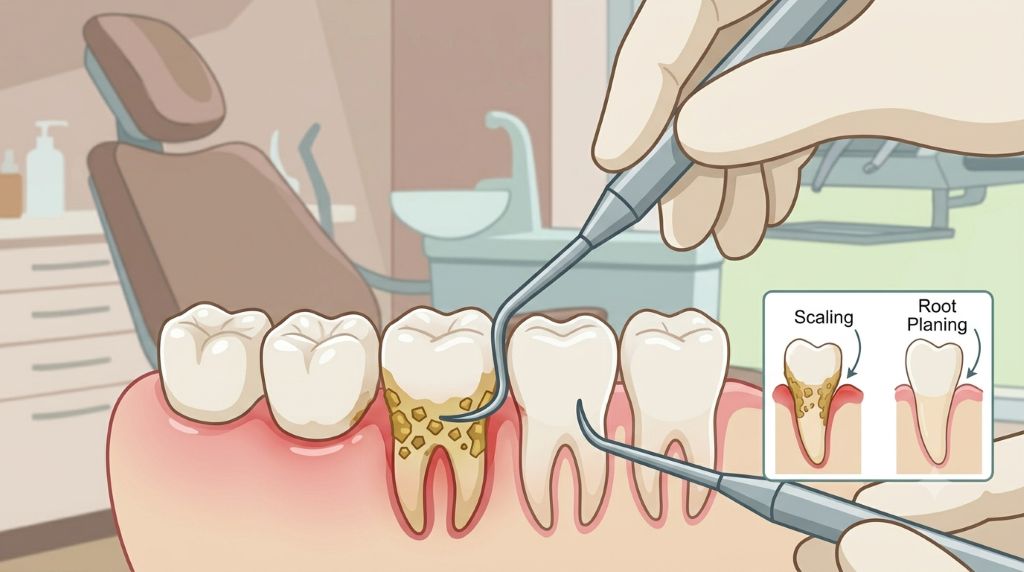
Scaling and root planing is a specialized non-surgical periodontal treatment designed to remove harmful bacteria, plaque, and tartar from below the gumline. It addresses the root cause of periodontal disease and encourages healing.
1. Scaling Explained
Scaling involves carefully removing plaque and hardened tartar deposits from the surfaces of teeth and beneath the gumline. Unlike a routine teeth cleaning, scaling reaches deep periodontal pockets where bacteria accumulate.
Advanced dental instruments and ultrasonic technology allow dental professionals to thoroughly clean areas that are inaccessible through standard home care methods.
2. Root Planing Explained
Root planing follows scaling and involves smoothing the root surfaces of affected teeth. Smoother roots make it more difficult for bacteria to adhere and help gum tissues reattach to the tooth structure.
This process reduces inflammation, promotes healing, and minimizes the risk of future bacterial accumulation.
Why It Is Considered the Gold Standard Non-Surgical Gum Disease Treatment
Scaling and root planing remains the preferred gum disease treatment because it:
- Removes infection-causing bacteria
- Reduces periodontal pocket depth
- Stops disease progression
- Encourages gum tissue healing
- Helps preserve natural teeth
- Reduces the need for surgical intervention
For patients seeking effective non-surgical periodontal treatment, this procedure delivers predictable and long-lasting results.
Scaling and Root Planing vs Regular Dental Cleanings
While both procedures support oral health, they serve different purposes and address different levels of disease.
What Happens During Routine Dental Cleanings?
Routine dental cleanings focus on removing plaque and tartar above the gumline. These preventive appointments help maintain healthy teeth and gums while allowing dentists to detect problems early.
Professional cleanings are essential for preventing cavities, gum disease, and other oral health concerns.
When Deep Cleaning Is Necessary
A deep teeth cleaning becomes necessary when gum disease advances beyond the early gingivitis stage. Dentists may recommend scaling and root planing if:
- Periodontal pockets exceed normal depth.
- Gum inflammation persists.
- Significant tartar buildup exists below the gumline.
- Bone loss is detected.
In these situations, standard cleanings may not provide adequate treatment.
Key Differences Between Teeth Cleaning, Scaling, and Root Planing
| Teeth Cleaning | Scaling and Root Planing |
| Preventive care | Therapeutic treatment |
| Cleans above gumline | Cleans below gumline |
| For healthy gums | For gum disease |
| Routine maintenance | Active infection control |
| Usually completed in one visit | May require multiple visits |
Benefits of Scaling and Root Planing for Gum Disease
The benefits of this treatment extend beyond healthier gums and can significantly improve overall oral health.
1. Prevents Further Gum Damage
Removing bacteria and tartar helps reduce inflammation and infection, preventing further destruction of gum tissues.
2. Helps Preserve Natural Teeth
Untreated periodontal disease can lead to tooth mobility and eventual tooth loss. Scaling and root planing help protect the supporting structures around teeth, reducing the need for procedures such as tooth extraction.
3. Improves Overall Oral Health
Patients often experience:
- Fresher breath
- Reduced gum bleeding
- Healthier gum tissue
- Lower plaque accumulation
- Improved comfort during brushing and flossing
4. Supports Overall Health
Research continues to demonstrate strong connections between oral health and systemic health. Effective gum health care may help reduce inflammation throughout the body and support overall wellness.
What to Expect During Gum Disease Treatment
Understanding the treatment process helps patients feel more comfortable and confident about their care.
Initial Examination and Diagnosis
A comprehensive periodontal evaluation may include:
- Oral examination
- Gum pocket measurements
- Digital X-rays
- Assessment of bone levels
- Review of medical history
These findings help determine the severity of gum disease and guide treatment planning.
The Treatment Process
Scaling and root planing are typically performed using local anesthesia for patient comfort. The dentist or hygienist removes plaque and tartar deposits before smoothing root surfaces.
Depending on the extent of disease, treatment may be completed over one or more appointments.
Recovery and Aftercare
Following treatment, patients may experience temporary sensitivity or mild discomfort. Proper aftercare includes:
- Gentle brushing and flossing
- Following professional instructions
- Using recommended mouth rinses
- Attending follow-up visits
- Maintaining regular maintenance cleanings
Consistent care supports successful healing and long-term results.
Who Is a Candidate for Scaling and Root Planing?
Many patients diagnosed with periodontal disease can benefit from this effective treatment.
Patients with Early to Moderate Periodontitis
Candidates often exhibit:
- Gum inflammation
- Bleeding gums
- Deep periodontal pockets
- Mild to moderate bone loss
- Persistent tartar buildup
Early intervention provides the best opportunity for successful treatment outcomes.
Patients Seeking Non-Surgical Gum Disease Treatment
Individuals who want to avoid more invasive periodontal procedures often choose scaling and root planing as their first line of treatment.
Addressing periodontal disease early can reduce the likelihood of needing surgical procedures later.
Why Early Gum Disease Treatment Matters
Prompt treatment can prevent extensive damage and reduce future dental costs.
Risks of Delaying Treatment
Ignoring gum disease may result in:
- Tooth loss
- Advanced bone deterioration
- Chronic infection
- Increased treatment complexity
- Higher long-term expenses
Importance of Routine Dental Cleanings
Regular dental cleanings remain one of the most effective ways to prevent gum disease and identify problems before they worsen.
Preventive care supports healthier smiles and minimizes the need for extensive restorative treatment, such as root canal treatment or dental crowns.
Gum Disease Treatment in Scottsdale, AZ: Finding the Right Dental Care
Choosing the right provider can make a significant difference in treatment outcomes and patient experience.
What to Look for in a Periodontal Care Provider
A qualified provider should offer:
- Comprehensive periodontal evaluations
- Advanced diagnostic technology
- Personalized treatment planning
- Ongoing periodontal maintenance
- Patient-focused care
Patients seeking gum disease treatment in Scottsdale AZ, benefit from working with experienced professionals who prioritize prevention and long-term oral health.
Benefits of Choosing a Local Provider
Local care offers:
- Convenient scheduling
- Consistent follow-up appointments
- Easier access to emergency care
- Long-term monitoring and maintenance
Patients searching for gum disease treatment near me often appreciate the convenience and continuity of care provided by a trusted local dental team.
Why Choose Scottsdale Family Dentistry for Gum Disease Treatment?
Quality periodontal care requires expertise, technology, and a personalized approach.
Comprehensive Periodontal Care
Our team provides advanced diagnostics, customized treatment plans, and evidence-based periodontal therapies designed to restore healthy gums and protect natural teeth. Patients seeking care for gum disease in Scottsdale can trust our commitment to delivering exceptional treatment and long-term results.
As a practice recognized by many patients searching for the best dentist in Scottsdale AZ, we focus on personalized periodontal care, advanced technology, and preventive solutions that support lasting oral health.
Preventive and Restorative Dental Services
In addition to periodontal therapy, we offer:
- Professional dental cleanings
- Preventive teeth cleaning services
- Restorative dentistry
- Dental crowns
- Root canal treatment
- Comprehensive oral health evaluations
Our goal is to provide complete dental care under one roof while supporting every stage of your oral health journey.
Conclusion
Scaling and root planing remains one of the most effective and proven options for treating periodontal disease without surgery. By removing harmful bacteria, reducing inflammation, and promoting healthy gum attachment, this treatment helps protect natural teeth and restore oral health. Combined with routine dental cleanings, preventive care, and ongoing maintenance, patients can enjoy healthier gums and a lower risk of future complications.
If you are experiencing symptoms of gum disease or looking for professional gum disease treatment in Scottsdale, Call Scottsdale Family Dentistry today to schedule your periodontal evaluation and take the first step toward healthier gums and lasting oral health.
Frequently Asked Questions About Scaling and Root Planing
Is scaling and root planing painful?
Most patients experience minimal discomfort because local anesthesia is typically used during treatment. Mild tenderness or sensitivity may occur afterward but usually resolves within a few days with proper care.
How long does the treatment take?
The procedure length depends on the severity of gum disease. Many patients complete treatment in one to four appointments, allowing the dental team to thoroughly clean affected areas and support healing.
How much does gum disease treatment cost?
Costs vary based on the extent of infection, the number of treated areas, and individual treatment needs. A comprehensive examination helps determine the most accurate treatment estimate.
Can gum disease be reversed?
Gingivitis can often be reversed with professional care and improved oral hygiene. Advanced periodontitis cannot be completely reversed, but scaling and root planing can effectively manage and control the condition.
How often should I schedule dental cleanings?
Most patients benefit from professional cleanings every six months. Individuals with a history of gum disease may require more frequent maintenance visits to support long-term periodontal health.
Will I need additional treatment after scaling and root planing?
Some patients require periodontal maintenance visits or additional therapies depending on disease severity. Follow-up care helps ensure continued healing and reduces the risk of recurrence.